LINKS :
Follow Us :

LINKS :
Follow Us :
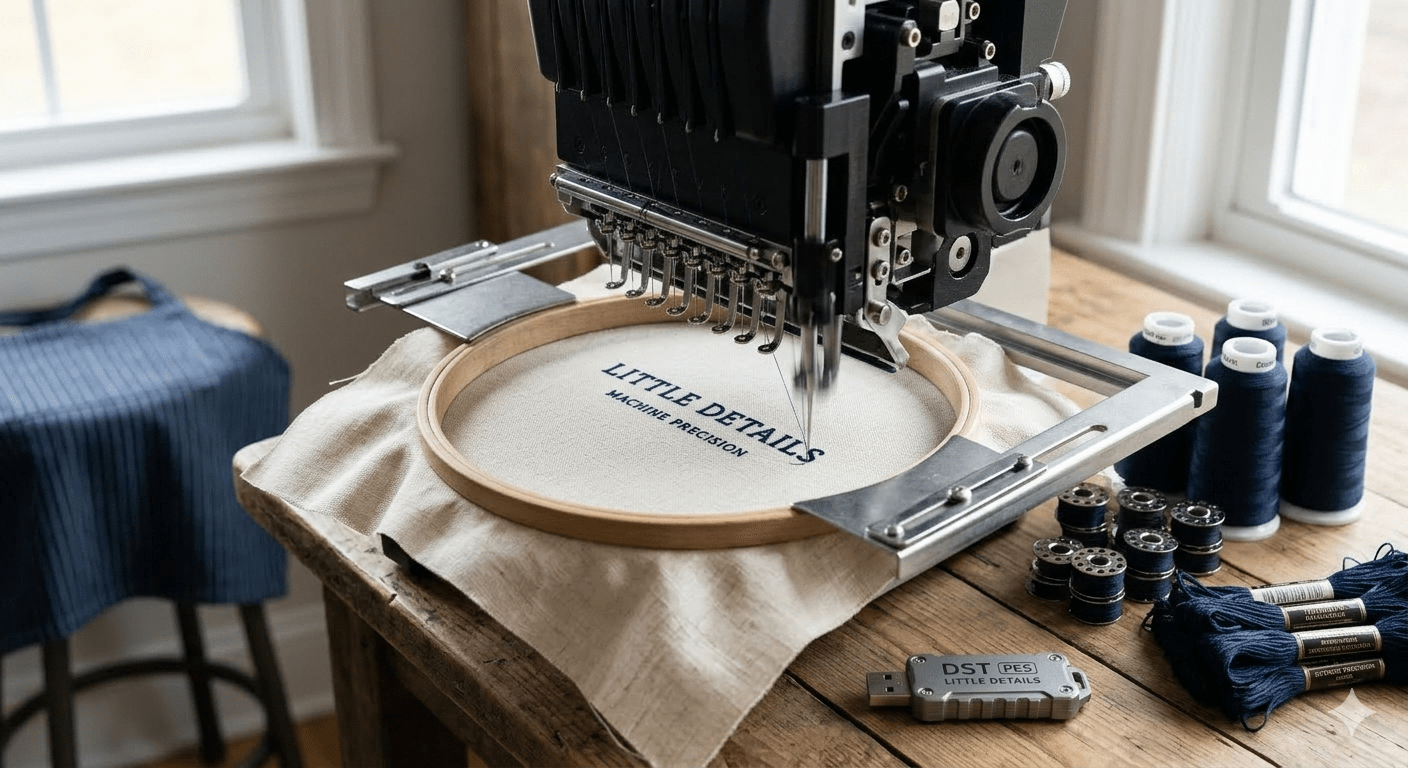
Embroidering small letters and fonts is one of the most challenging aspects of needlework — whether you work by hand or use a machine. Tiny text tends to blur, bunch up, or lose its shape entirely, leaving even seasoned embroiderers frustrated. But with the right techniques, tools, and settings, you can produce clear, professional, and visually stunning small lettering that elevates every project. In this comprehensive guide, we cover everything you need to know to master small text embroidery.
Before diving into solutions, it helps to understand why small lettering is inherently difficult in embroidery. Unlike large designs where individual stitches are barely noticeable, small fonts are extremely sensitive to even minor imperfections. A stitch that is off by 0.5mm can distort an entire letter when the text height is under 6mm.
The main challenges include:
Now that we know the culprits, let’s address each one with practical, actionable tips.
Not all fonts are created equal when it comes to small text embroidery. This is arguably the single most important decision you’ll make. The wrong font will always look messy at small sizes, no matter how perfect your other settings are.
For text under 10mm in height, prioritize simple, clean letterforms with minimal detail. Sans-serif block fonts (like those resembling Arial Bold or Futura) perform significantly better than script or decorative fonts at small sizes because they have fewer thin strokes and curves that can collapse under thread weight.
💡 Pro Tip: Test Before You Commit
Always stitch a test sample of your chosen font at your target size on a scrap of the same fabric before working on your final piece. This saves material and frustration.
One of the most overlooked rules in small font embroidery is the concept of a minimum viable size — the smallest height at which a given font can still be read clearly after stitching.
| Font Type | Minimum Recommended Height | Thread Weight |
|---|---|---|
| Simple Block / Sans-serif | 4–5mm | 60wt or 80wt |
| Standard Sans-serif | 6–7mm | 60wt |
| Serif Fonts | 8–10mm | 40wt or 60wt |
| Script / Cursive | 10–12mm minimum | 40wt |
| Decorative / Display | 15mm+ | 40wt |
Trying to push below these thresholds almost always results in illegible text. If your design requires tiny lettering, consider switching to a simpler font before reducing the size further.
Standard embroidery thread is typically 40wt, which is perfect for most designs — but it becomes too bulky for very small letters. Switching to a 60wt or 80wt thread makes an enormous difference when embroidering small letters clearly.
Finer thread allows for more detail in a smaller space. The stitches sit flatter, the edges of each letter remain crisp, and the overall appearance is much more polished. Some embroiderers even use 100wt silk thread for monograms under 5mm — the results are remarkable.
Beyond weight, color contrast between your thread and fabric is critical for readability. Dark thread on a light background (or vice versa) will always read more clearly than similar tones. For small text, avoid placing medium-value thread on a medium-value background — the letters will visually disappear even if technically well-stitched.
💡 Pro Tip: Needle Size Matters
When using finer thread, downsize your needle accordingly. A size 75/11 needle works well with 60wt thread, while an 80/12 is standard for 40wt. The correct needle size reduces friction and prevents thread breakage.
A proper stabilizer is non-negotiable when embroidering small fonts. Even the smallest amount of fabric movement during stitching will throw off the registration of your letters, causing them to look wobbly or misaligned.
⚠️ Common Mistake: Under-stabilizing
Many embroiderers use too little stabilizer to save cost. For small lettering, always err on the side of more support — you can always trim it away afterward, but you can’t undo puckered or misaligned text.
For machine embroidery, how your design is digitized is just as important as the physical settings on your machine. Poor digitizing is the #1 cause of unclear small lettering, and it cannot be fixed by changing thread or stabilizer alone.
Good digitizing for small text is about restraint — fewer stitches, placed more precisely.
Proper hooping is the foundation of clean embroidery in general — but for small embroidery lettering, it becomes absolutely critical. Even slight distortion in the hoop will compound across every letter, resulting in text that looks stretched, skewed, or misaligned.
Speed is the enemy of precision when stitching small text. Running your embroidery machine at full speed generates vibration that accumulates into inaccuracies, especially in tight letter formations. For small fonts, reduce your machine speed to 400–600 stitches per minute (about 50–60% of maximum for most machines).
The few extra minutes this adds to your stitching time are well worth the improvement in accuracy and consistency of your finished lettering. This single adjustment has saved countless monogram projects from the trash bin.
If you embroider by hand, small lettering presents its own unique set of challenges. The key principles are the same — stabilize, use appropriate thread weight, choose simple fonts — but the execution relies entirely on your stitching consistency.
💡 Pro Tip: Transfer Your Design Precisely
For hand embroidery, use a water-soluble pen and a light box (or bright window) to transfer your lettering exactly onto the fabric. Imprecise transfer = imprecise stitching. Never freehand small text unless you have years of practice.
The fabric you choose plays a direct role in how clearly your small embroidered text reads. Tightly woven, smooth fabrics like cotton, linen, or twill are ideal for small lettering because they provide a stable, even surface with minimal texture interference.
Avoid loose-weave fabrics, heavy textures, or fabrics with a high pile (like fleece or velvet) for small text projects. The fabric’s texture will literally engulf your stitches, making them disappear or look muddy. If you must stitch on a textured fabric, always use a water-soluble topping to keep stitches on the surface.
Mastering small lettering embroidery is a journey that rewards patience and attention to detail. The tips outlined in this guide — from choosing the right font and thread weight, to optimizing your digitizing settings and slowing down your machine — work together as a system. Applying just one or two will bring improvement; applying all of them consistently will transform your results.
Remember that every fabric, every font, and every design is slightly different. Keep a stitching journal to record what settings and combinations worked best for each project. Over time, you’ll build an intuition for small text embroidery that makes clean, readable lettering second nature.
Start with a test swatch, respect the minimum size limits for your chosen font, use proper stabilization, and never rush the process. Your small letters will speak clearly — and beautifully.