
Embroidery is one of the most rewarding crafts you can learn. The gentle pull of thread through fabric, the slow transformation of plain cloth into a colorful work of art — there is something deeply satisfying about it. But if you are just starting out, the journey can also be frustrating. Many beginners make the same mistakes over and over, not because they lack talent, but simply because no one told them what to watch out for.
In this comprehensive guide, we will walk you through the most common beginner embroidery mistakes and, more importantly, show you exactly how to avoid them. Whether you are just picking up a needle for the first time or you have completed a few projects but feel like something is always going wrong, this article is for you.
1. Choosing the Wrong Fabric
One of the very first beginner embroidery mistakes is grabbing whatever fabric is available without thinking about whether it is suitable for embroidery. Not all fabrics are created equal. Slippery fabrics like satin or very loosely woven materials can be incredibly frustrating for beginners because the needle slips, the fabric puckers, and the stitches do not sit evenly.
How to avoid it: Start with tightly woven, stable fabrics such as cotton quilting fabric, linen, or Aida cloth (especially if you are learning cross-stitch). These fabrics keep their shape well, allow the needle to pass through smoothly, and hold your stitches neatly. As you gain experience, you can experiment with more challenging materials.
2. Using Thread That Is Too Long
This is a classic mistake. Beginners often cut long lengths of thread thinking it will save them time by reducing how often they need to re-thread the needle. However, long threads tangle, knot, and fray as you stitch, leading to messy, uneven work and a lot of frustration.
How to avoid it: Always work with a thread length of no more than 45 to 50 centimeters (about 18 inches). This length is long enough to make good progress on your stitching but short enough to prevent tangling. Thread length is a small detail that makes a huge difference in the quality of your finished piece.
3. Not Using an Embroidery Hoop
Many beginners skip the hoop, thinking it is optional or just an extra hassle. This is a significant error. Without a hoop, fabric stretches and shifts as you work, causing uneven tension in your stitches and a puckered, distorted design when you finish.
How to avoid it: Always use an embroidery hoop or frame. Choose a hoop that fits your project — the fabric should be taut but not overly stretched. Wooden hoops are great for beginners because they are easy to tighten and hold the fabric well. Remember to loosen your hoop at the end of each work session to avoid leaving permanent marks on the fabric.
4. Pulling the Thread Too Tight
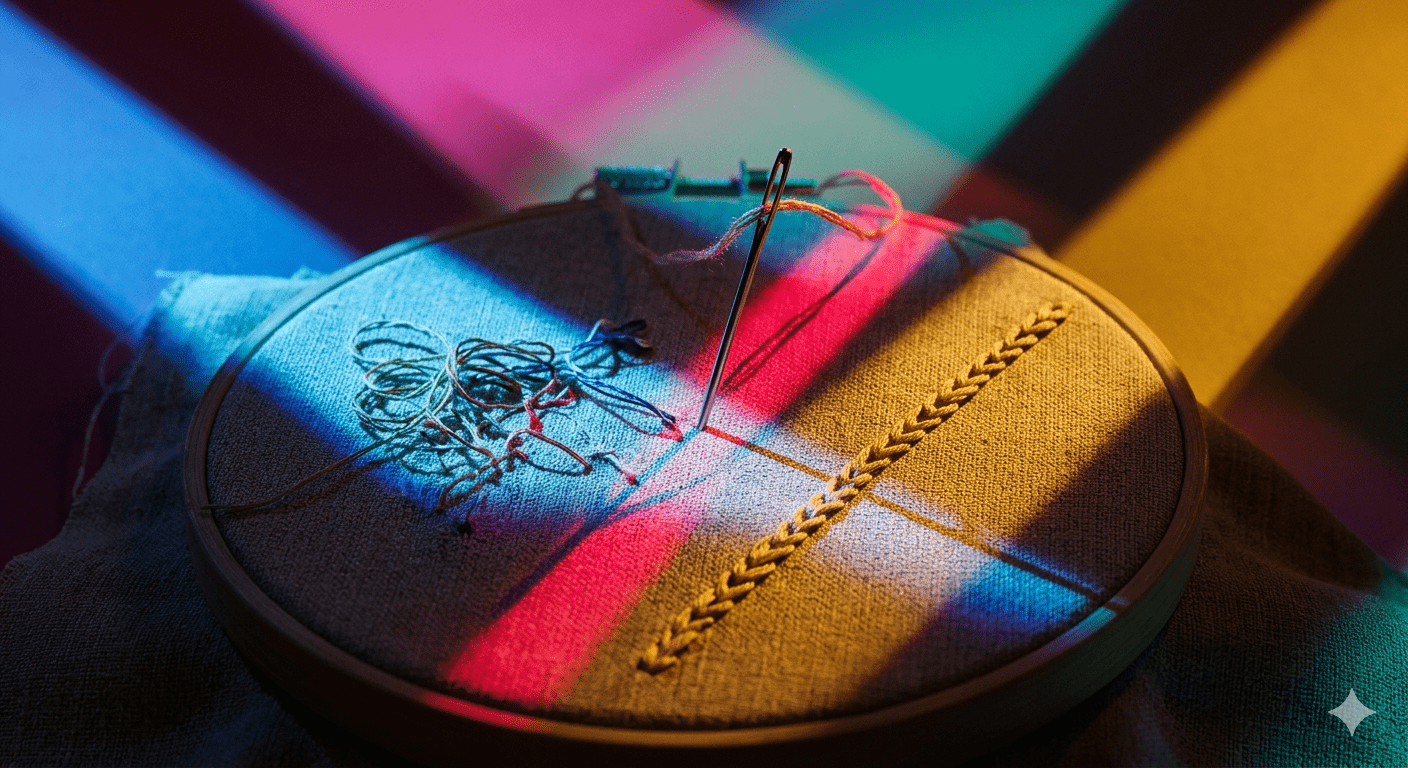
Another extremely common beginner embroidery mistake is pulling each stitch too tightly. When you tug hard on the thread after every stitch, the fabric puckers and the stitches sink into the cloth rather than sitting on top of it beautifully.
How to avoid it: Let the thread lie naturally on the fabric. Pull it through gently until the stitch lies flat and smooth — no tighter. Practice this rhythm: push the needle through, pull the thread slowly, stop when the stitch is snug but not strained. With practice, this becomes second nature.
5. Knotting the End of the Thread
It seems logical to tie a knot at the end of your thread so it does not pull through the fabric. But knots create lumps on the back of your work, which can show through lightweight fabrics and make framing or finishing difficult.
How to avoid it: Learn the “waste knot” method or the “away waste knot” technique for starting threads. Alternatively, you can begin by leaving a short tail of thread on the back and securing it under your first few stitches. To end a thread, simply weave it neatly under the back of your stitches. This gives a clean, professional finish to both sides of your work.
6. Ignoring Thread Tension Consistency
Inconsistent tension — pulling some stitches tight and leaving others loose — is one of the biggest reasons beginner embroidery looks amateurish. The lack of uniformity gives the design an uneven, messy appearance.
How to avoid it: Slow down. Embroidery is not a race. Focus on keeping every stitch the same length and the same tension. If you are working on a satin stitch (filling an area with smooth, parallel stitches), make sure each thread lies perfectly parallel to the next, with no gaps and no overlapping. Regular practice on a sampler before starting a real project is invaluable.
7. Skipping Pattern Transfer Preparation
Beginners often rush into stitching without properly transferring or preparing their pattern on the fabric. They draw lines too heavily, use the wrong marker, or place the design incorrectly, which leads to visible marks after the embroidery is done — or worse, a design that does not fit the fabric properly.
How to avoid it: Use water-soluble fabric markers or heat-erasable pens to transfer your design. Always test the marker on a scrap piece of the same fabric before using it on your project to make sure it disappears cleanly. Center your design carefully on the fabric before you begin. Taking an extra few minutes at this stage saves hours of regret later.
8. Using Too Many Strands at Once
Embroidery floss typically comes in six strands twisted together. A common beginner embroidery mistake is using all six strands at once for every part of the design. This creates heavy, bulky stitches that look thick and informal.
How to avoid it: Separate the strands and use only what the pattern recommends — usually two or three strands for most detailed work. For fine detail or small lettering, use just one strand. For bold outlines or chunky textures, three or four strands work well. Learning to match the number of strands to the effect you want is one of the skills that takes your work from beginner to intermediate.
9. Not Learning the Basic Stitches First
Enthusiasm is wonderful, but jumping straight into a complex pattern without mastering the fundamental stitches is a recipe for frustration. Beginners often attempt intricate designs before they are comfortable with the running stitch, backstitch, satin stitch, or French knot.
How to avoid it: Before starting any real project, practice the core stitches on a sampler. A sampler is simply a piece of fabric where you practice different stitches without worrying about a final result. Spend time getting comfortable with at least five to ten basic stitches. Once they feel natural, tackling complex patterns becomes much more enjoyable and less overwhelming.
10. Rushing to Finish
Perhaps the most universal of all beginner embroidery mistakes is simply rushing. When you rush, stitches become uneven, thread tangles more, and mistakes multiply. You end up having to unpick your work — which is tedious and can damage the fabric — or you finish with a result you are not proud of.
How to avoid it: Embrace the slow, meditative nature of embroidery. Set aside focused stitching time without distractions. If you are tired or stressed, put the project down and come back to it later. Good embroidery cannot be hurried. The experienced stitchers who produce breathtaking work are not faster than beginners — they are simply more consistent, patient, and mindful.
11. Skipping the Back of the Work
Many beginners focus exclusively on the front of their embroidery and create a tangled web of threads on the back. While the back does not need to be as perfect as the front, excessive mess on the back adds bulk, creates tension problems, and makes the finished piece harder to frame or display.
How to avoid it: Develop the habit of keeping your thread travels short on the back of the fabric. Instead of carrying thread across a long distance, end the thread and start a new one closer to the next section. Aim for a relatively tidy back — not perfect, but organized. This also improves the overall quality of your stitches on the front.
12. Using Poor-Quality Materials
Buying the cheapest materials available is tempting when you are just starting out. But low-quality thread frays easily, bleeds color when washed, and breaks mid-stitch. Dull, cheap needles drag through the fabric and damage the threads.
How to avoid it: Invest in good-quality embroidery floss from reputable brands, and use sharp, properly sized needles designed for hand embroidery. You do not need to buy the most expensive materials on the market — mid-range options are perfectly fine for beginners. Good tools simply make the whole experience smoother and more enjoyable, and they produce better results.
Final Thoughts: Progress Over Perfection
Every experienced embroiderer you admire once made every single one of these beginner embroidery mistakes. The difference between them and someone who gives up is that they kept going, kept learning, and kept stitching.
Avoiding the common pitfalls outlined in this guide will help you build good habits from the very start. Focus on the process — on the rhythm of the needle, the feel of the thread, the gradual appearance of color and texture on the fabric. Progress will come naturally, and with it, confidence and skill.
Embroidery is a craft that rewards patience and curiosity. Embrace the learning curve, forgive your early mistakes, and enjoy every stitch.
Did you find this article helpful? Share it with a fellow beginner stitcher or save it for future reference. Happy stitching!